Zendesk vs. Forethought
AI should simplify customer support, not complicate it. Try the Zendesk integrated CX solution and see how it beats add-on AI tools like Forethought.
Última actualización el September 10, 2025
Zendesk vs. Forethought: Which is better?
Zendesk and Forethought promise AI agents that automate and optimize the customer experience (CX), but only one comes with AI agents pre-trained on more than 18 billion real customer interactions.
Zendesk provides a full-stack customer experience solution with omnichannel coverage, AI-powered agent workflows, and enterprise-grade governance. Forethought AI, on the other hand, is a standalone AI tool that must be layered onto other help desks. This means a complex setup (where you have to manually train AI on your customer data), higher integration overhead, and limited quality control.
If you’re comparing Zendesk vs. Forethought, here are five reasons businesses choose Zendesk.
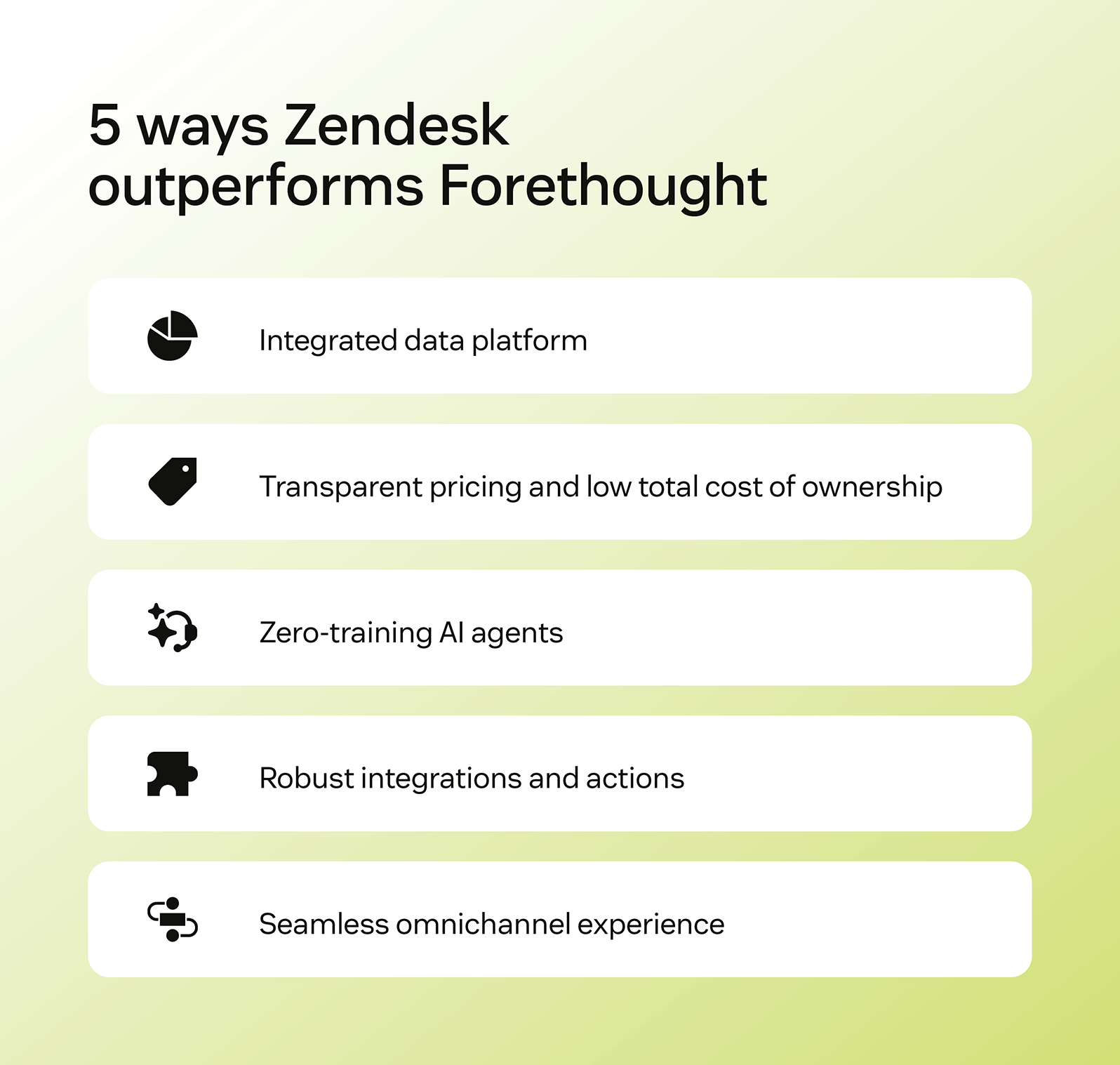
Integrated data platform
Founded in 2007, Zendesk brings AI, ticketing, analytics, and QA into a single CX solution, reducing vendor management, integration risk, and total cost of ownership.
Meanwhile, Forethought is relatively new and lacks key features such as multi-step workflows or Retrieval-Augmented Generation (its AI agents can’t generate answers based on external sources). It’s a standalone AI layer that bolts onto other systems, which adds complexity, increases setup effort, and integration overhead. So while Zendesk enables automated, contextual handoffs between AI and agents at all touchpoints, Forethought simply copies transcripts from its widget into an agent's workspace.
Transparent pricing and low total cost of ownership
Zendesk has transparent, predictable pricing, and you only pay for automated resolutions once they’re verified as successful.
Forethought, on the other hand, takes the “custom quote” route. It also bills you for all automated conversations, including those handed off to agents or abandoned without a resolution. Besides, as you’re still paying for a help desk, that’s double the costs.
Zero training AI agents
Powered by nearly 20 years of experience and billions of real customer service interactions, Zendesk AI agents launch in minutes and deliver immediate value. Zendesk AI Agents require zero training or ticket history. Flows can be built in minutes with pre-trained intents and no data dependency.
Forethought’s AI agents require manual training on your historical ticket data. This means performance depends heavily on the quality (and quantity) of what you feed it.
Robust integrations and actions
Zendesk AI agent integration builder allows you to create low-code workflows that read, write, and orchestrate multi-action steps. Add to this our 1,800+ plug-and-play apps and integrations, and you can automate nearly any conversation.
Forethought has a much smaller integration ecosystem. Its automations are also limited to chat and don’t support write-backs or orchestration, making it difficult to perform complex workflows.
Seamless omnichannel experience
The Zendesk AI agents are truly omnichannel, maintaining context as customers move between email, chat, voice, and more. They also provide multilingual support.
Forethought limits emails to just one reply before pushing customers into a chat window for two-way conversations, with handoffs limited to simple copy/paste transcripts.
More in this guide:
- At-a-glance comparison: Zendesk vs. Forethought
- Zendesk vs. Forethought: Features comparison
- Pricing plans: Forethought vs. Zendesk
- What customers say about Zendesk
- Frequently asked questions
- Ready to scale your business with Zendesk?
At-a-glance comparison: Zendesk vs. Forethought
Here’s a quick TL;DR chart to give you an idea of how Zendesk and Forethought compare on core features like AI, integrations, and more.
|
Critical capabilities |
Zendesk |
Forethought |
|
AI agents |
|
|
|
Voice |
|
|
|
Integrations and actions |
|
|
|
Omnichannel and multilingual support |
|
|
|
Data and analytics |
|
|
|
Quality assurance |
|
|
|
Ease of setup & accuracy |
|
|
Zendesk vs. Forethought: Features comparison
Now that you know how Zendesk or Forethought approach core CX capabilities, let’s dive into the nuances.
AI agents
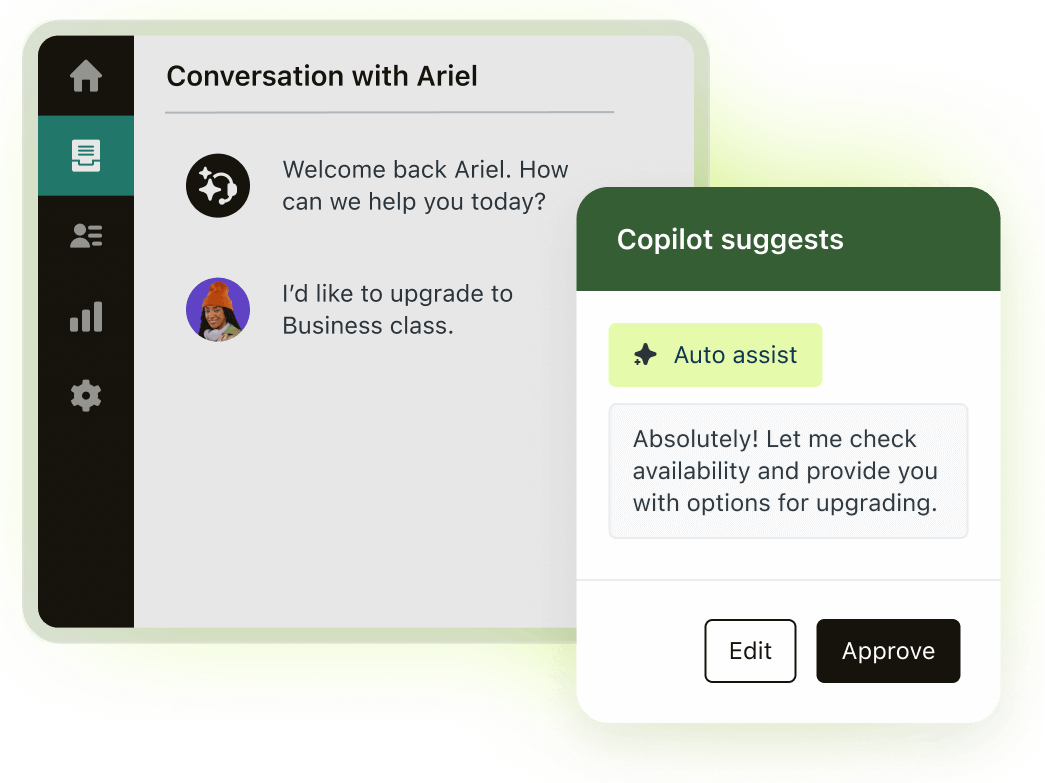 Make customer service always-on with Zendesk AI agents. |
Zendesk AI agents are pre-trained and ready to deploy immediately, even if you set up custom agent personas or intents. AI capabilities also extend to triaging, search, QA, and agentic workflows. The AI agents also use Retrieval-Augmented Generation (RAG) to source answers from knowledge bases and the web. Finally, Zendesk only charges for automated conversations with a verified resolution. Abandoned conversations or those handed off to human agents will not be billed. Forethought, in comparison, requires manual intent setup for AI agents. You also need to train them on historical data for accuracy. And while it can connect to different sources, it can’t synthesize answers from them—it only suggests articles. It’s also more expensive, as all automated interactions (even the failed ones) will be billed. |
Voice
|
Zendesk allows you to set up phone lines for customer support and automate them with AI. The AI voice agent can automatically resolve conversations, create tickets for calls, or escalate to human agents with intelligent triage. You can also set queue sizes and wait time limits so callers can request a callback instead of holding. Forethought Voice works, but it’s quite limited. The AI agent can only hand off the call to a different number—it can’t create help desk tickets for the call. Also, you can’t set wait times, callers can’t request callbacks, and the auto-resolution flows and fallback paths have to be set up manually. |
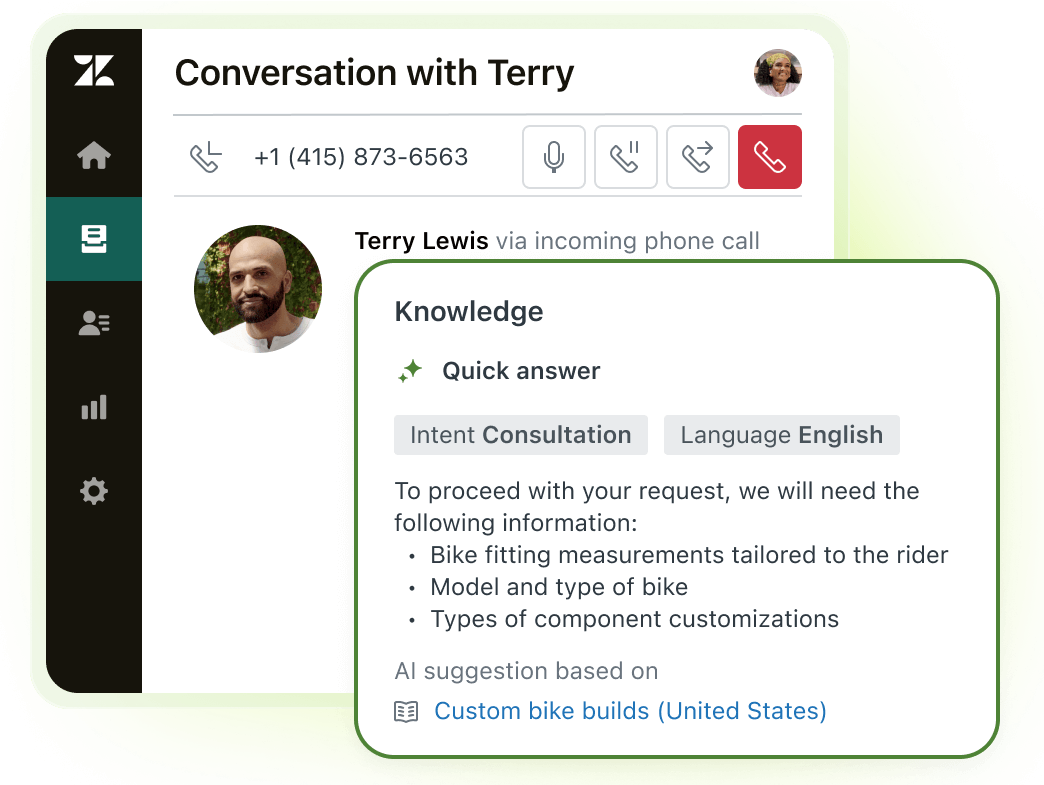
Automate phone support with Zendesk voice software. |
Integrations and actions
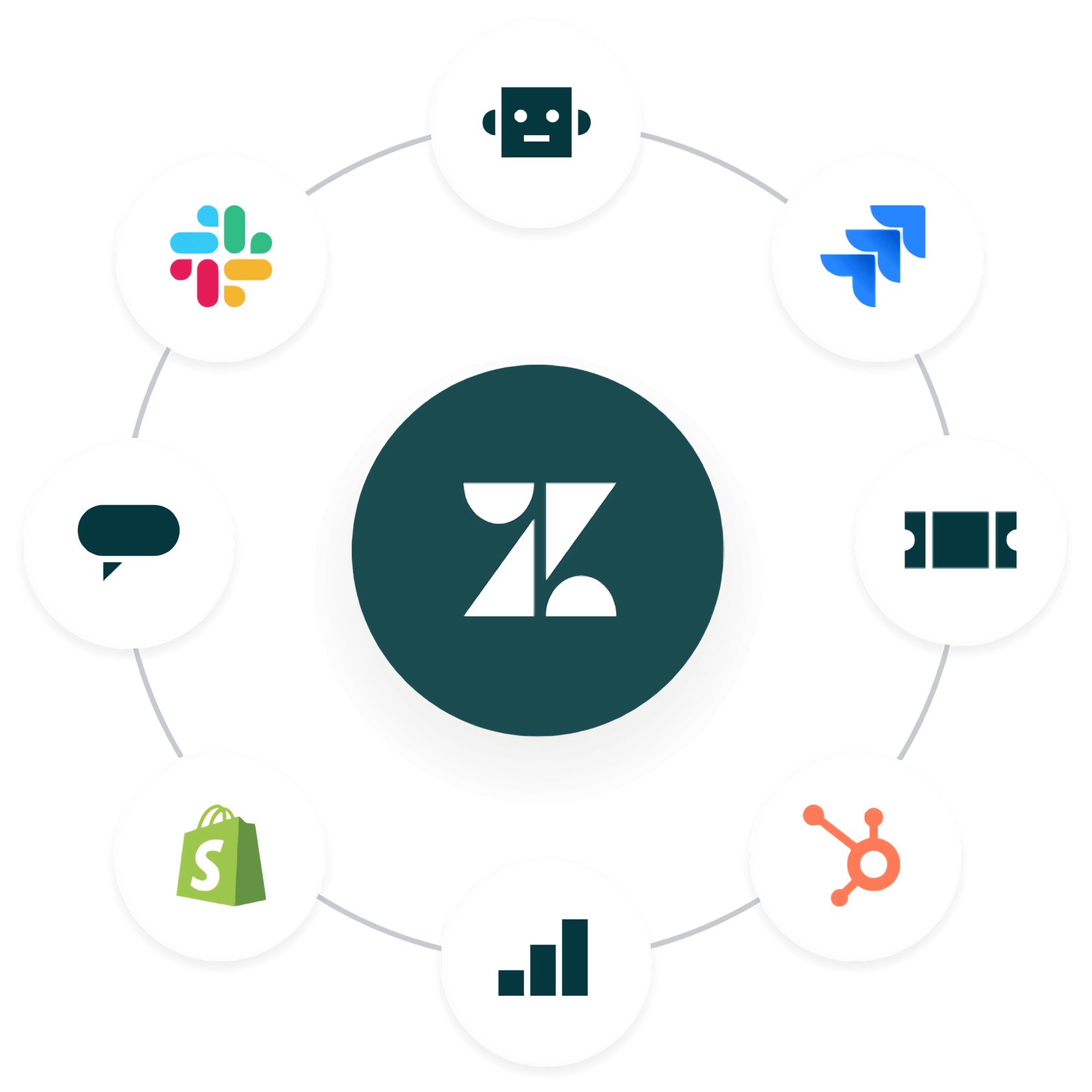
Extend your CX stack with 1,800+ integrations from Zendesk Marketplace. |
Zendesk offers 1,800+ apps and integrations and powerful low-code workflows that can read and write data—so it can trigger new workflows from past actions, update records, and coordinate across tools. You can also use the dialog builder to teach AI agents how to interact with customers depending on their intent and use case. The help center’s architecture is also optimized to make RAG easier for AI agents. Forethought is quite limited, with around 70 integrations. It’s also read-only—it can’t handle multi-step workflows like triggering follow-ups or updating records. You need to manually set up issue resolutions for autoflows, and the AI will then match them to conversations. |
Omnichannel and multilanguage support
|
Zendesk is an omnichannel CX solution with built-in email, chat, messaging, and social media support. This means agents get visibility into everything in one UI, and AI agents aren’t limited by data siloes. Zendesk also comes with advanced multilingual capabilities across the entire suite. You get AI agents fluent in 30+ languages and suggested replies in 80+ languages. Agents can also auto-translate live messages to chat with customers in different languages. Forethought is an AI-only add-on, which means you’ll need to integrate multiple third-party apps to avoid data silos. While it supports 32 languages, it doesn’t offer live translation, limiting real-time multilingual support. |
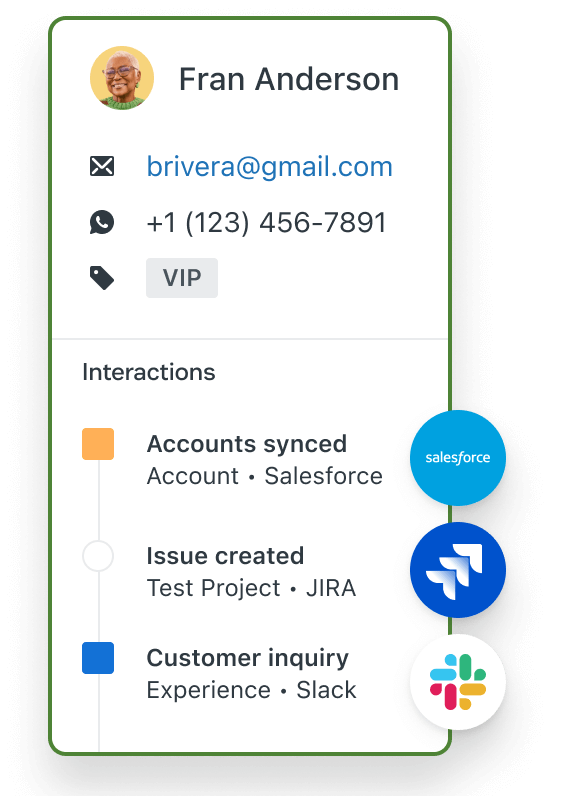
Explore everything you can do with Zendesk for customer service. |
Data and analytics
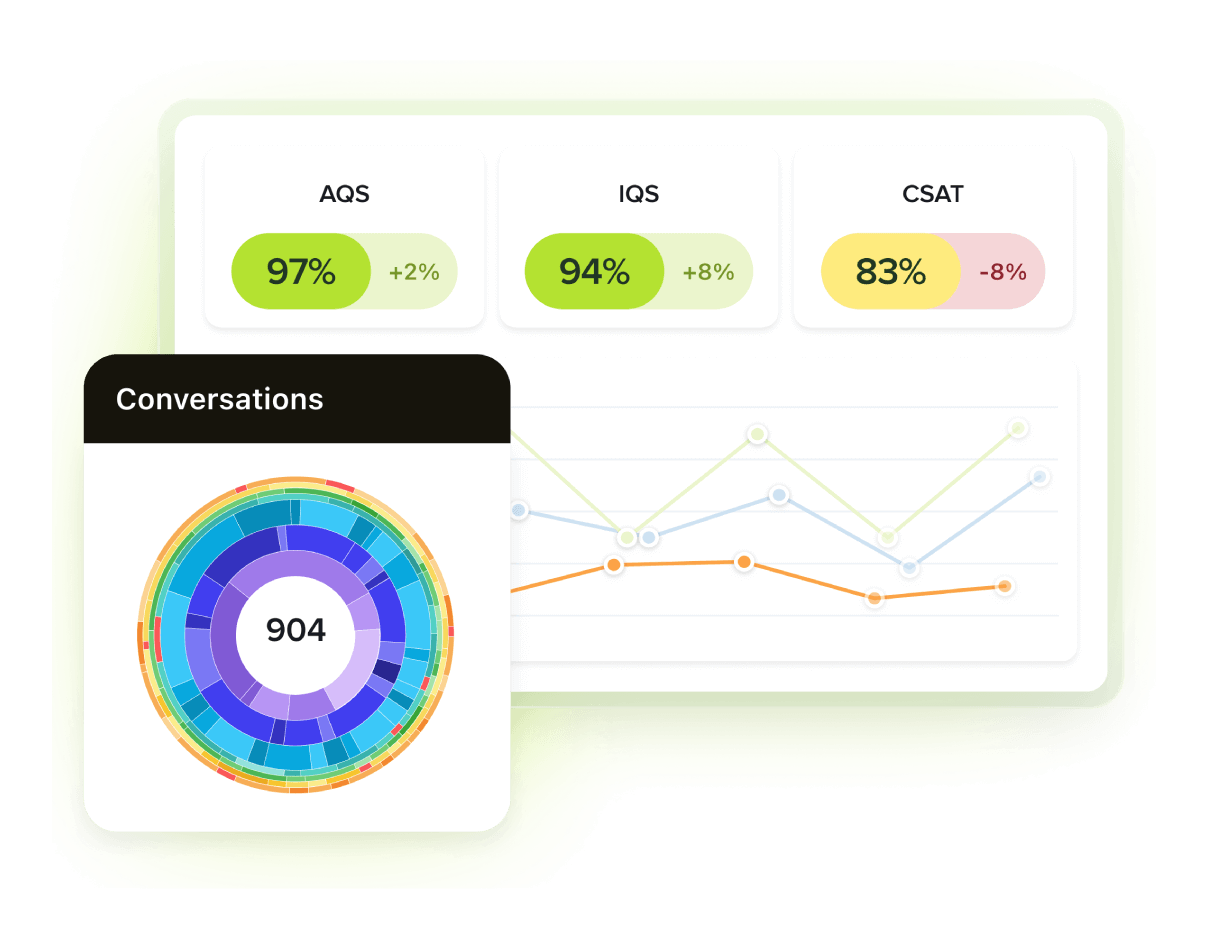
Improve support ops with the Zendesk advanced reporting solution. |
Zendesk gives you clear insights into your support ops, such as ticket trends, agent performance, and CSAT scores. You can also use drill-down reports to break down metrics by channel, issue type, or customer segment, and correlation reports to identify patterns between those metrics. For example, the Conversation Journey Explorer gives you an aggregated view of all customer interactions over a selected timeframe, helping you spot escalation paths, reply loops, and interrupted flows. With Knowledge Gap Analysis, you can also see which help articles are most accessed by AI agents, highlighting topics where your AI agent struggles to find relevant answers. Forethought, in comparison, is quite limiting. It offers only basic AI insights and an analytics dashboard with no support for custom reports. It’s more about surface-level metrics than actionable insights, as it doesn’t correlate data to real outcomes. |
Quality assurance
|
Zendesk AutoQA analyzes both human and AI interactions (voice included), then ties those insights to CSAT scores, escalations, and even churn risk. This makes it easy to spotlight knowledge gaps and coach your agents. In your own words, you can also tell AutoQA what to look for in support interactions and build custom frameworks for quality assurance. Forethought Agent QA, however, only analyzes agent conversations, not AI ones. This means you only get half the picture. Moreover, its custom frameworks are limited to a combination of agent-focused rubrics like grammar and empathy, and user-focused rubrics like starting or ending sentiment. |
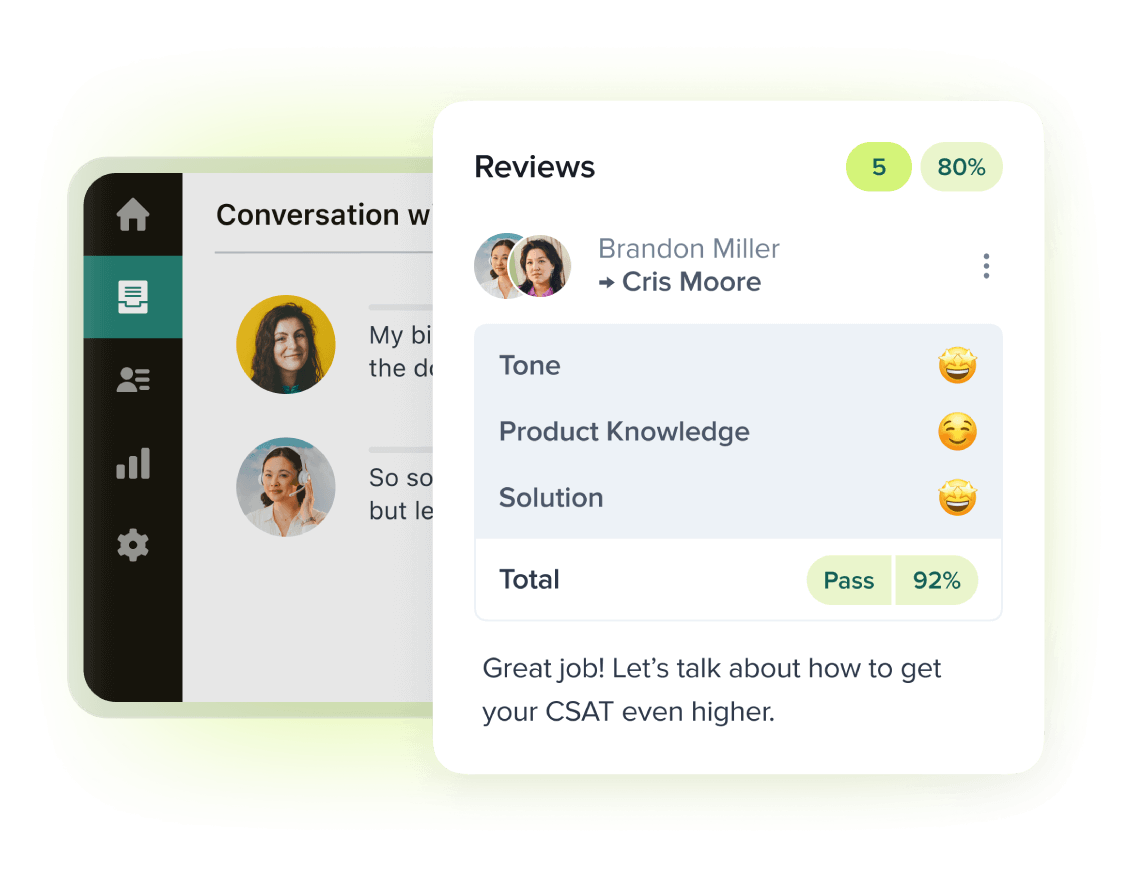
Analyze interactions with Zendesk AI-powered QA. |
Pricing plans: Forethought vs. Zendesk
|
Zendesk |
Forethought |
|
|
|
*Plans are billed annually. |
With Zendesk, you get transparent, predictable pricing that scales with your business. Its tiered plans support every stage of growth, and because it’s an all-in-one solution, there’s no need for extra tools. AI and everything else are built right in.
Forethought, on the other hand, has gated pricing. This means pricing can be arbitrary, and you don’t know what you’re getting. You’ll also need to pay extra for basic features like the Slack add-on. All this doesn’t include what you’ll pay for your help desk and knowledge base, making the total cost of ownership higher than Zendesk.
What customers say about Zendesk
Here are some real-world stories from businesses that have successfully scaled their support operations with Zendesk.
Siemens + Zendesk: Improving overall visibility with omnichannel software
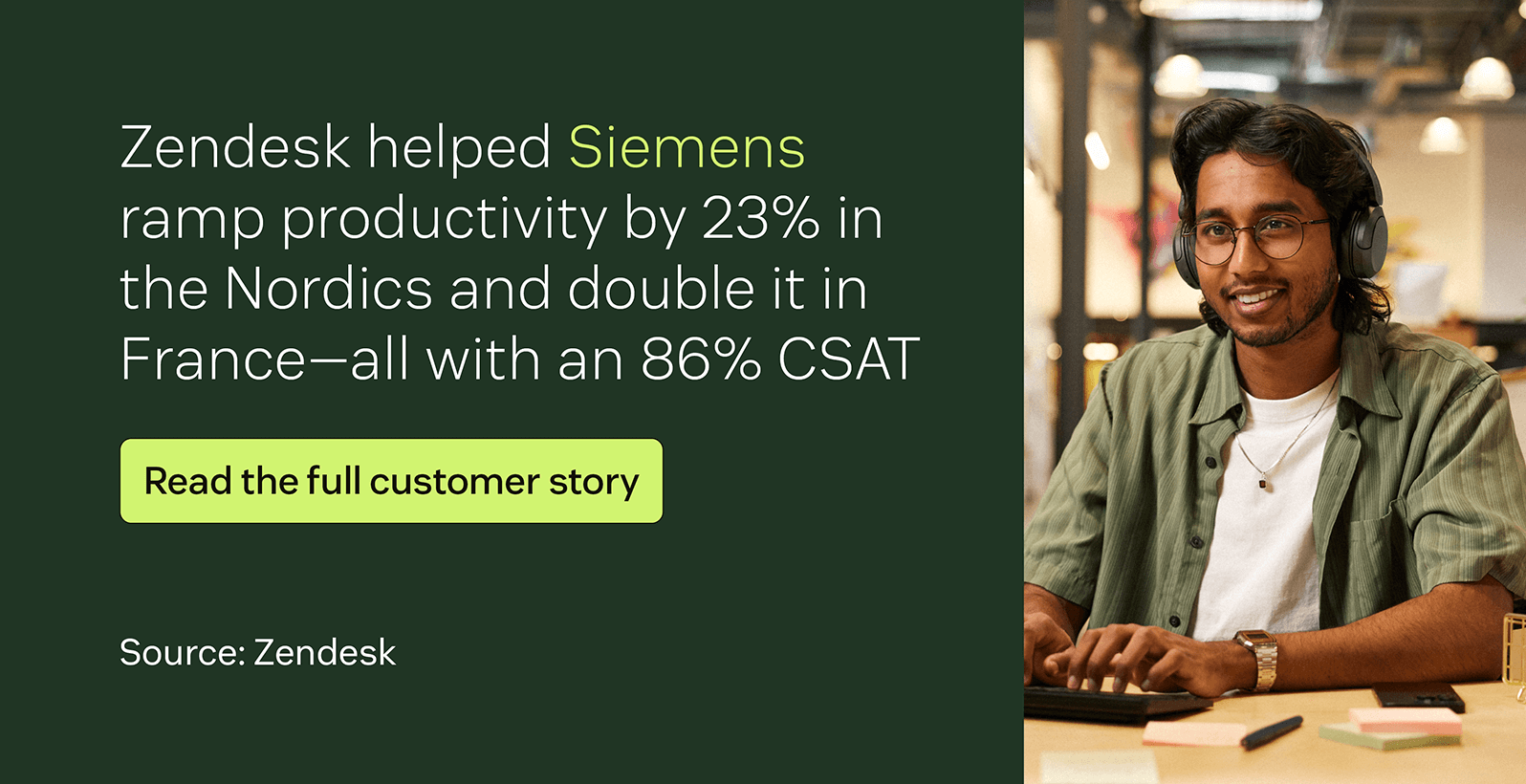
“Bringing all customer data into one place means agents now have overall visibility. Instead of using different platforms and applications, they can stay within Zendesk. In this omnichannel environment, including phone, email, and, more recently, WhatsApp, they can efficiently communicate and answer customer queries.”
— STEVE FRANKLIN, Head of global customer services at Siemens
Motel Rocks + Zendesk: Resolving tickets faster with zero-training AI agents

“We implemented Zendesk AI earlier this year; it’s ready straight out of the box, and everyone knew what they were doing. It’s really intuitive, we didn’t have to change any core processes, it is just another button that will help you and show you the information.”
— LUCY HUSSEY, Customer service manager at Motel Rocks
Taskrabbit + Zendesk: Optimizing support and workforce management with intuitive AI solutions
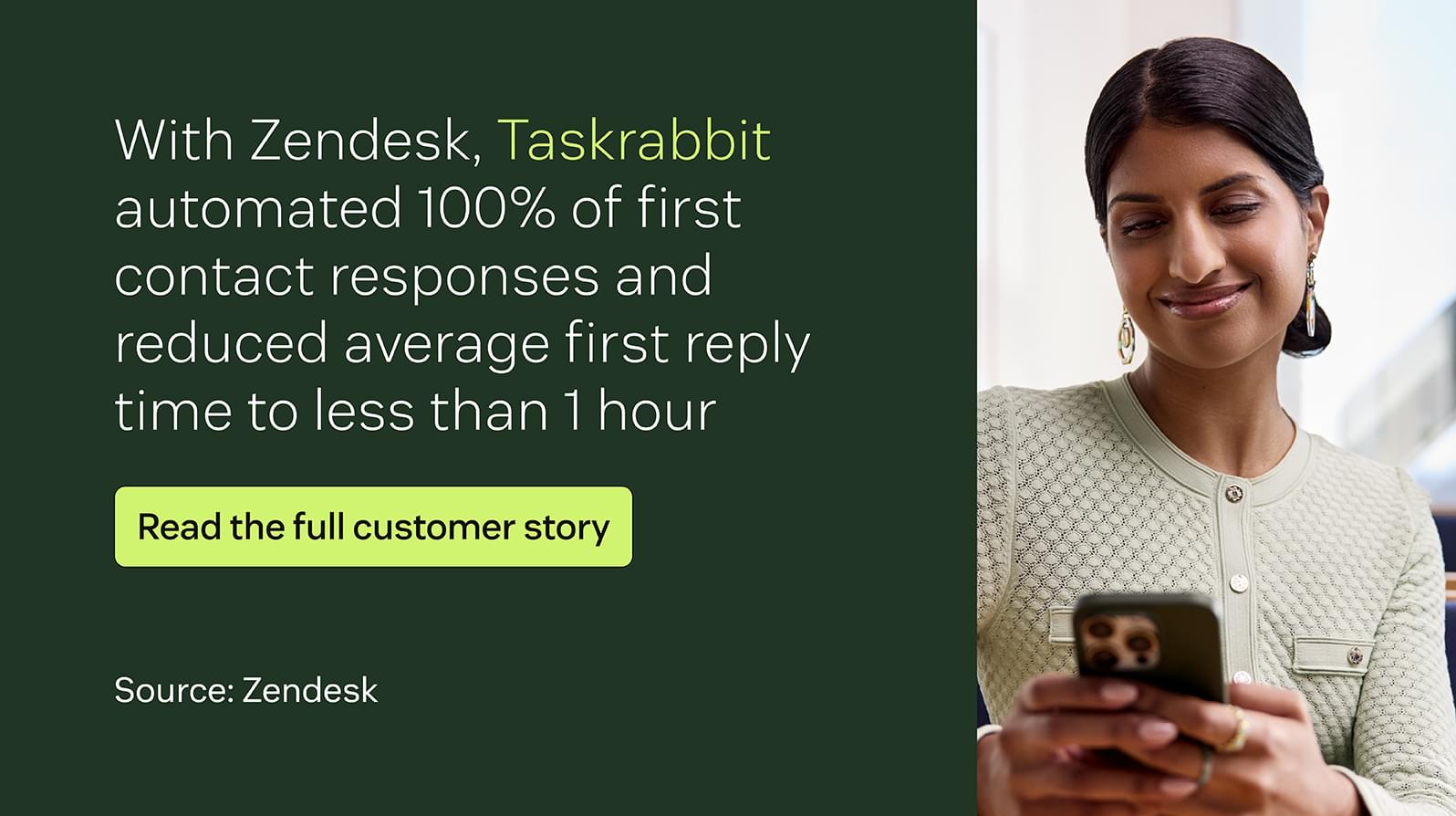
“When choosing an AI agent, it’s really about what the implementation looks like. We were focused on the ease of use with building and on the quality of the product features. That’s where Zendesk won.”
— MIMI ERLICK, Manager, AI ops team at Taskrabbit
Frequently asked questions
Ready to scale your business with Zendesk?
Zendesk is an omnichannel, enterprise-ready CX software that gives you everything you need to deliver self-service and real-human support from day one. No need to combine Forethought AI with a separate help desk at twice the cost. Try Zendesk for free, and see how it boosts both agent productivity and customer satisfaction.
Zendesk vs. the rest: Compare the software
Explore our comparison guides to see how Zendesk stacks up against other customer experience software.